

Get Involved
Thank you for volunteering with us
Dog Walkers
When you arrive on your first visit, please sign in and make yourself known to someone and let them know you are new and they will show you around. Here is what you need to know before you arrive.
Removing the Dog from its cage
- Greet the Dog outside the cage
- Distract the Dog away from the gate if possible
- Make yourself familiar with the bolt, doors open inwards
- Enter and try to avoid turning your back on the Dog to begin with
- Connect them to the lead taking your time if they are excited
- If they are excited ignore them and turning away slightly can help calm them down.
Direction of Entry and Exit
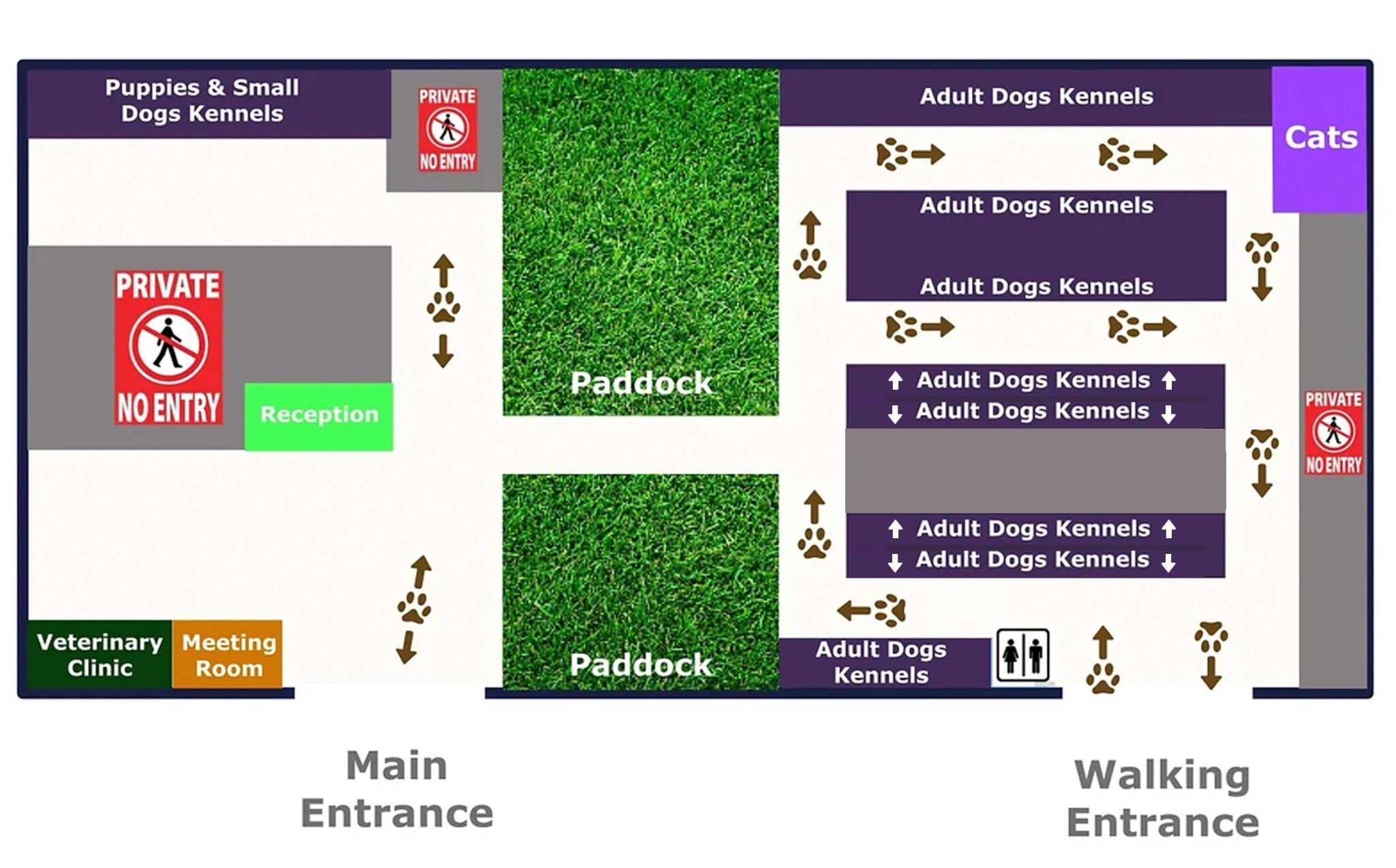
- Please take a look at the plan here
- Dogs are taken out of the kennels walking away from the main entrance and then brought back in the other end, this ensures dogs do not meet face to face or have to pass each other where space is restricted
- Keep the kennel areas and entrance and exits clear
- YOU MUST make sure all doors and gates are closed and locked behind you.
Pegs
- Peg the gate/door not the cage, when you take the Dog out to walk.
Notices
- “PPP & Do not walk” If there is a message on the cage with either of these mentioned, do not enter the cage, do not take the Dog out under any circumstances.
- “Do Not Enter” Most Puppy cages will also have a do not enter sign, this is due to vaccinations. Please respect this to avoid transferring viruses to other dogs, this is for your safety.
- “Strong walkers only” in this instance the Dog requires a strong walker, the Dog is not restricted however we want to keep everyone safe and comfortable.
While Walking
- Please take photos, videos, make notes about the way the Dog walks and their temperament. Send this to us on messenger.
- Not all Dogs love other Dogs, please be mindful of this when meeting other Dogs on the walk, listen to the other walker and maintain control of your Dog. We want to avoid all aggression and fighting.
- Not all Dogs like Cats and some of our dogs are extremely strong. Please keep your focus as Cats do live in the protectora.
- Please do not let the dogs eat any grass as they are often sprayed by farmers and contain pesticides poisonous to dogs
FAQs
- R means they are reserved.
- C means they have been castrated.
- PPP, this dog is considered a restricted breed, you cannot walk these dogs unless you have a licence. We have walkers who specifically walk these dogs, they are also exercised regularly in the Paddocks.
- You may wish to invest in a slip lead, there are leads on hand but having your own one can help.
- Bring your own refreshments.
- Sorry not for dogs, It’s very difficult to monitor them to ensure they safely play and also may cause fights.
- Cat toys can be taken in. Please make sure they are designed for cats before leaving them in the cages. Please also don’t move them between cages.
Don’t panic or shout. If you have treats use these or another dog to attract them. If you cannot get the dog to come back send another volunteer to alert a member of staff but you should stay with the dog. DO NOT RUN.
Wear comfortable, old clothes you don’t mind getting dirty.
Closed shoes with good grip, the floors are often wet.
You may see others giving treats. We however don’t recommend you do this as it can upset the dogs stomach and feeding routine.
Yes you can, please ensure they are aware of the rules and basic animal etiquette. They remain YOUR responsibility at all times.
Yes, the dogs get very excited to see you, they know they are about to go out. You will get used to it and it’s quieter when you are out on the walk.
Please report it to a member of the shelter staff or to the office. Runny tummies are normal in shelter animals so please don’t worry unless it’s more than that.
You can tell them what you know about the animals you have walked/cuddled, invite them to go to the Reception to start the process. Name labels with an R on their label are reserved.
Visit the office or find one of the kennel staff, (usually cleaning), if you cannot get away shout ‘Help’ and ‘Ayúdame’.